Discover Local Craftsmanship and Cretan Traditions in 2026
17/04/2026
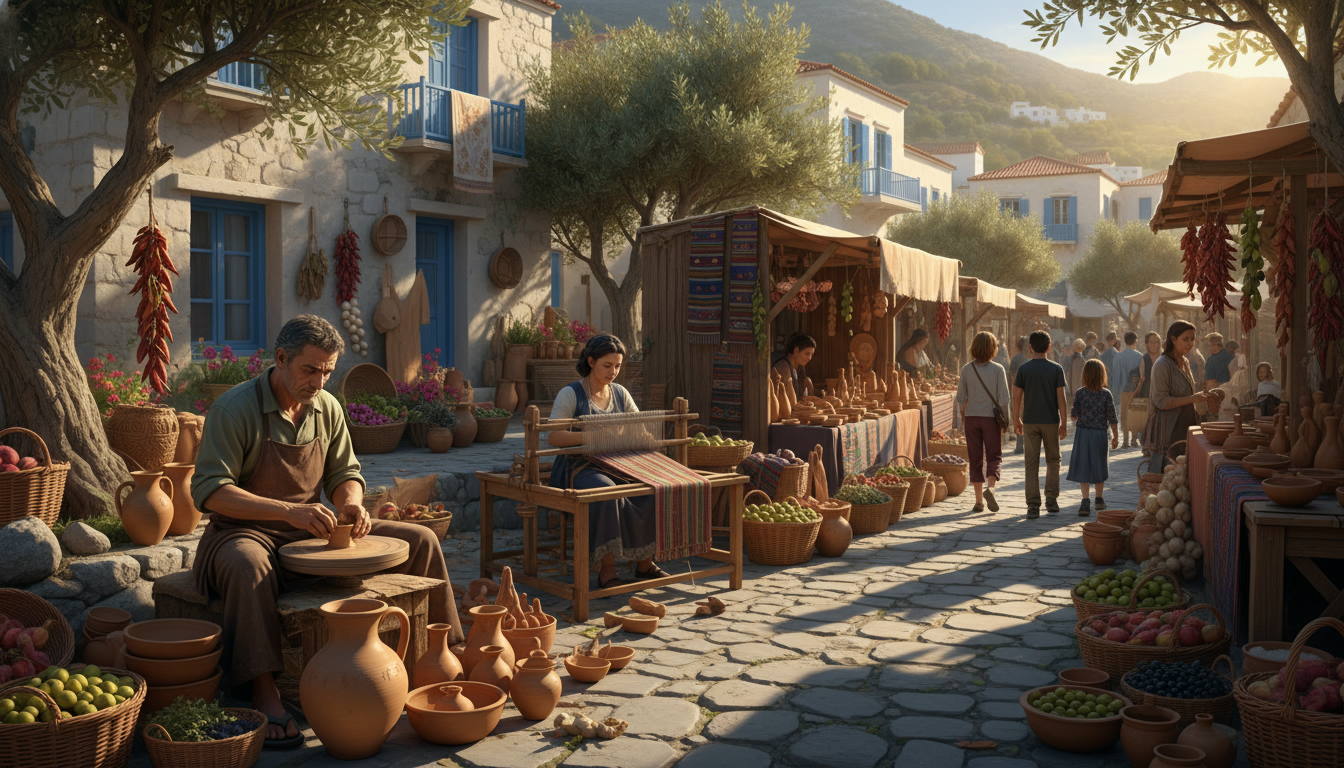
In brief, what you will discover in this article: a comprehensive guide to discovering local craftsmanship and authentic Cretan traditions. You will learn where to find ancestral expertise, which villages to visit, how to participate in workshops, and how to live a unique cultural immersion in Crete.
1. Introduction: Why Discover Local Craftsmanship and Authentic Cretan Traditions
Crete is an island rich in history and culture, where Cretan artisan skills are passed down from generation to generation. Discovering local craftsmanship and authentic Cretan traditions means immersing yourself in a living world, far from typical tourist paths. This approach allows you to understand how locals live, see their handmade objects, and meet passionate artisans. To prepare for a truly enriching trip to Crete, it’s essential to prioritize these authentic experiences that reveal the soul of the island.
To enhance your stay, you can also consult specialized resources like arteonn.com, which offers in-depth cultural content.
2. Context and Cultural Importance: A Brief History of Craftsmanship in Crete
Cretan craftsmanship draws its roots from a millennial history, blending Minoan, Byzantine, and Ottoman influences. These ancestral artisan techniques have evolved while preserving their authenticity, reflecting the customs and traditions of Crete. Traditional trades are often linked to local natural resources such as clay, wool, or leather, embodying a living heritage that shapes the daily life of the inhabitants.
3. Main Trades and Expertise (General Overview)
3.1 Pottery and Ceramics: Techniques and Iconic Places
Traditional pottery in Crete is an ancient art, especially in villages like Thrapsanó and Margarites. Artisans use local clays to create jars, hand-painted tableware, and decorative objects. These pieces, often signed, show an evolution from utilitarian to folk art, with typical motifs and techniques handed down over centuries.
3.2 Weaving and Textiles: Patterns, Materials, and Workshops
Handmade textiles in Crete are renowned for their colorful patterns and natural materials such as wool and cotton. Villages like Anogeia are famous for their weaving workshops where you can watch the making of carpets, traditional clothing, and decorative items. These Cretan artisanal skills are often linked to strong cultural symbols.
3.3 Woodwork and Sculpture: Utility and Decorative Objects
Woodworking is another cornerstone of local craftsmanship, with objects ranging from furniture to kitchen utensils. Cretan artisans often carve traditional motifs, blending aesthetics and functionality, thus preserving an ancestral know-how.
3.4 Leatherwork and Traditional Shoemaking
In mountainous regions, leatherworking is particularly developed. Workshops offer the making of belts, sandals, and traditional boots called stivanias, crafted using natural tanning processes without chemicals. These authentic pieces are highly valued souvenirs for their quality and story.
3.5 Silversmithing and Traditional Jewelry
Cretan handmade jewelry, often inspired by ancient motifs and the Heraklion museum, is made using traditional methods. They combine precious metals and local stones, reflecting the island’s rich cultural heritage. These unique creations are both art objects and identity symbols.
4. Where to See and Experience Craftsmanship on the Island
4.1 Local Markets and Artisan Fairs (Dates and Visiting Tips)
Local markets in Crete are prime spots to discover living craftsmanship. Among the must-see events, the pottery festival in Thrapsano and the Houdetsi artisan fair offer a festive immersion with music, dance, and tastings. These seasonal gatherings allow you to buy directly from artisans and interact with them.
4.2 Recommended Villages and Workshops (Practical Addresses)
For an authentic experience, visit villages like Margarites (pottery), Anogeia (weaving), Rethymnon (leather and jewelry), and Agia Varvara (shoemaking). These places host workshops open to visitors, where you can join demonstrations and purchase unique pieces.
4.3 Museums and Artisanal Centers
Several museums and cultural centers in Crete showcase artisan skills. They offer exhibitions and educational workshops that help you better understand the techniques and their evolution, enriching your cultural discovery.
5. Participatory Experiences and Themed Tours
5.1 Half-day/Full-day Workshops
Many workshops offer practical sessions to learn pottery, weaving, or jewelry making. These half-day or full-day experiences are ideal for initiating yourself in artisanal techniques while creating a personalized souvenir.
5.2 Stays with Artisans or Intensive Courses
For deeper immersion, some artisans welcome visitors for stays or intensive courses. These programs allow you to live according to Cretan traditions, learn precise gestures, and share the daily life of master craftsmen.
6. Living Traditions and Festive Calendar
6.1 Religious Festivals, Processions, and Dances Related to Craftsmanship
Crete’s customs and traditions are also expressed through religious festivals and processions where music, dance, and craftsmanship blend. These events offer unique opportunities to see skills in action within a festive and spiritual setting.
6.2 Seasonal Rituals (Harvest, Traditional Food Preparation)
Rituals related to olive harvesting, cheese making, or preparing traditional dishes like dolmades and kalitsounia mark local life. Participating in these moments allows a deeper understanding of Cretan culture as a whole.
7. Practical Advice for Visitors
7.1 Cultural Respect and Good Conduct Rules in Workshops
To enjoy a respectful experience, it is important to follow artisans’ rules, ask permission before photographing, and show genuine interest in their work. Respecting local customs fosters enriching exchanges.
7.2 How to Buy Responsibly: Labels, Authenticity Signs, Negotiation
Favor signed or labeled pieces guaranteeing authenticity. Avoid mass-produced or imported goods. Negotiation is common but should remain respectful, valuing the artisans’ work.
7.3 Transport, Languages, and Prices (Useful Logistics Info)
Artisan villages are often accessible by car or organized excursions. Most artisans speak basic English, and prices vary depending on the complexity of pieces and workshops. Budgeting accordingly ensures you fully enjoy these experiences.
8. Itinerary Ideas (e.g., 1 day, weekend, 5-day themes)
Here is an example itinerary for an artisanal immersion in Crete:
- Morning visit to the village of Margarites to discover traditional pottery.
- Lunch at a local tavern with traditional Cretan cuisine.
- Afternoon in Anogeia for a weaving workshop and meeting artisans.
- Evening in a village with a Cretan cultural festival, music, and dance.
For a longer stay, you can consult our complete guide on 1-week Crete itinerary which integrates these experiences into a balanced route.
9. Resources, Contacts, and Further Reading (Links, Maps, Associations)
To deepen your preparation, here are some useful resources:
- The guide to creative experiences in Crete details workshops and villages.
- The VillaNovo website offers an overview of culture and craftsmanship.
- The blog of Rental Center Crete presents the festive calendar and living traditions.
These links perfectly complement the information to organize an authentic trip.
10. Conclusion and Call to Action
Discovering local craftsmanship and authentic Cretan traditions is a rewarding experience that deeply connects you to the island’s culture. To fully enjoy this immersion, book a workshop or a stay with an artisan now, and don’t hesitate to subscribe to our newsletter to receive all updates. You can also download our interactive map to plan your visits precisely.
For more ideas on activities in Crete, check out our article on what to do in Crete.

Claire Dubois
Originaire de la région méditerranéenne, je suis passionnée par la découverte des richesses culturelles et naturelles de la Crète depuis plus de dix ans. Voyageuse aguerrie et rédactrice spécialisée en tourisme, j’ai à cœur de partager des conseils authentiques et pratiques pour aider les visiteurs à vivre une expérience unique sur l’île. Mon expertise locale et mon enthousiasme pour les traditions crétoises me permettent d’offrir des recommandations fiables et accessibles, du meilleur camping aux plus belles plages à ne pas manquer. À travers mes articles, je vous guide pas à pas pour organiser un séjour inoubliable, respectueux de l’environnement et des habitants.